Termite Swarms in Atlanta: What a Spring Swarm Tells You
Updated 2026-10 · Atlanta, GA
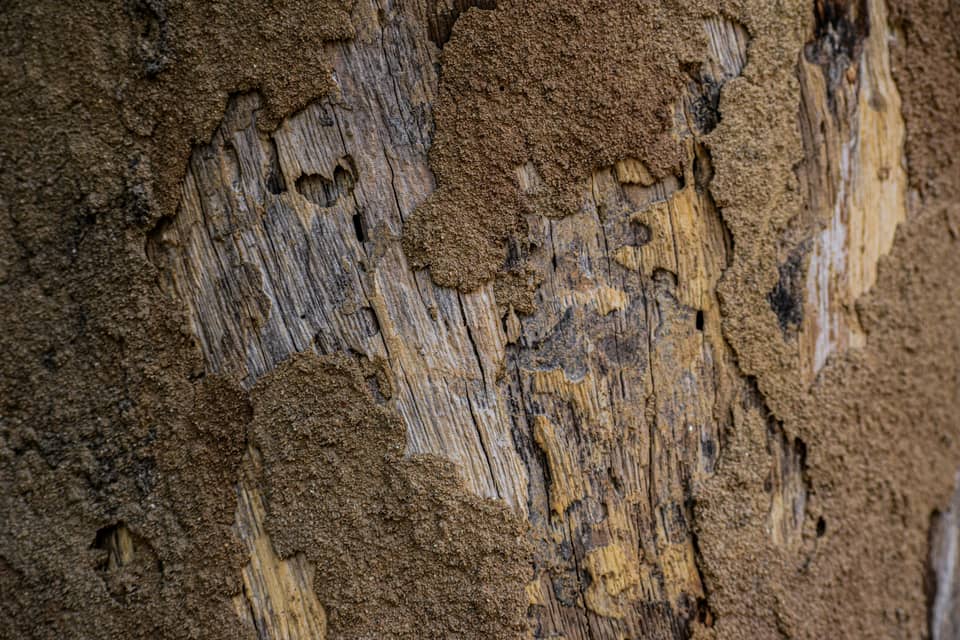
Why spring
A mature subterranean termite colony produces winged males and females once a year and sends them out to start new colonies. In Georgia the native species do it in daylight, generally starting in February or March and continuing into spring, and usually on a warm day after rain, when the soil is soft for the pairs that land. A warm spell in February can bring an early swarm. Most swarmers die within hours; very few ever start a colony.
Swarmer or flying ant?
Both swarm in spring and both turn up on windowsills. Three features separate them, and a phone camera is enough to check:
- Waist: termites are thick through the middle; ants are pinched to a narrow waist.
- Antennae: termite antennae are straight, like strings of beads; ant antennae are elbowed.
- Wings: termites have four wings of equal length, much longer than the body, that drop off easily. Ants have larger front wings than hind wings.
A pile of shed wings on a sill, with few bodies, is a classic termite sign. Save some in a sealed bag or on tape for the inspector.
Native or Formosan
Nearly all Atlanta swarms are native Reticulitermes termites: small, black swarmers about three-eighths of an inch long, flying by day in late winter and spring. The Formosan subterranean termite is different. UGA describes its swarmers as about half an inch long, caramel to brownish-yellow, swarming at night in late May or early June and drawn to lights. UGA has tracked a small number of confirmed Formosan colonies in Georgia, most of them in metro Atlanta, and still calls the species rare in the state. If you see a night swarm at a porch light in June, keep samples and say so.
Inside or outside makes the difference
A swarm outdoors, from a stump, a woodpile or the lawn, tells you termites are in the yard, which is true of most Atlanta yards. It is a reason to make sure the house is protected, not proof the house is infested.
A swarm indoors is different. It usually means a colony is feeding in or under the structure, often entering through a crawlspace pier, a slab crack, a bath trap or a door frame. It is not an emergency, because the damage has been happening for a long time and swarmers themselves eat nothing. It is a reason to book an inspection in the next week or two.
What not to do
Do not spray a swarm or mud tubes with store insecticide. It kills the swarmers, which were dying anyway, does nothing to the colony, and can make it harder for the inspector to see where they came from. Do not seal the crack they came out of before anyone has looked. And if you have a bond, call the company that holds it first: a swarm is what the contract is for.
Call to book an inspection after a swarm. Mention whether it was indoors or out and roughly when, and a local company will look at the house and quote in writing.
Where to go next
- Termite treatment in Atlanta
- Booking an inspection after a swarm
- Crawlspaces and termites in older houses
Common questions
Do termite swarmers bite or damage anything?
No. Swarmers do not bite or sting and do not eat wood. They are a sign of the colony that does.
Will they come back next year?
A colony usually swarms once a year, so a second swarm next spring is likely if nothing is done.
I have a bond. Who do I call?
The company that holds the bond, first. A new swarm inside a house under contract is what the guarantee covers.